


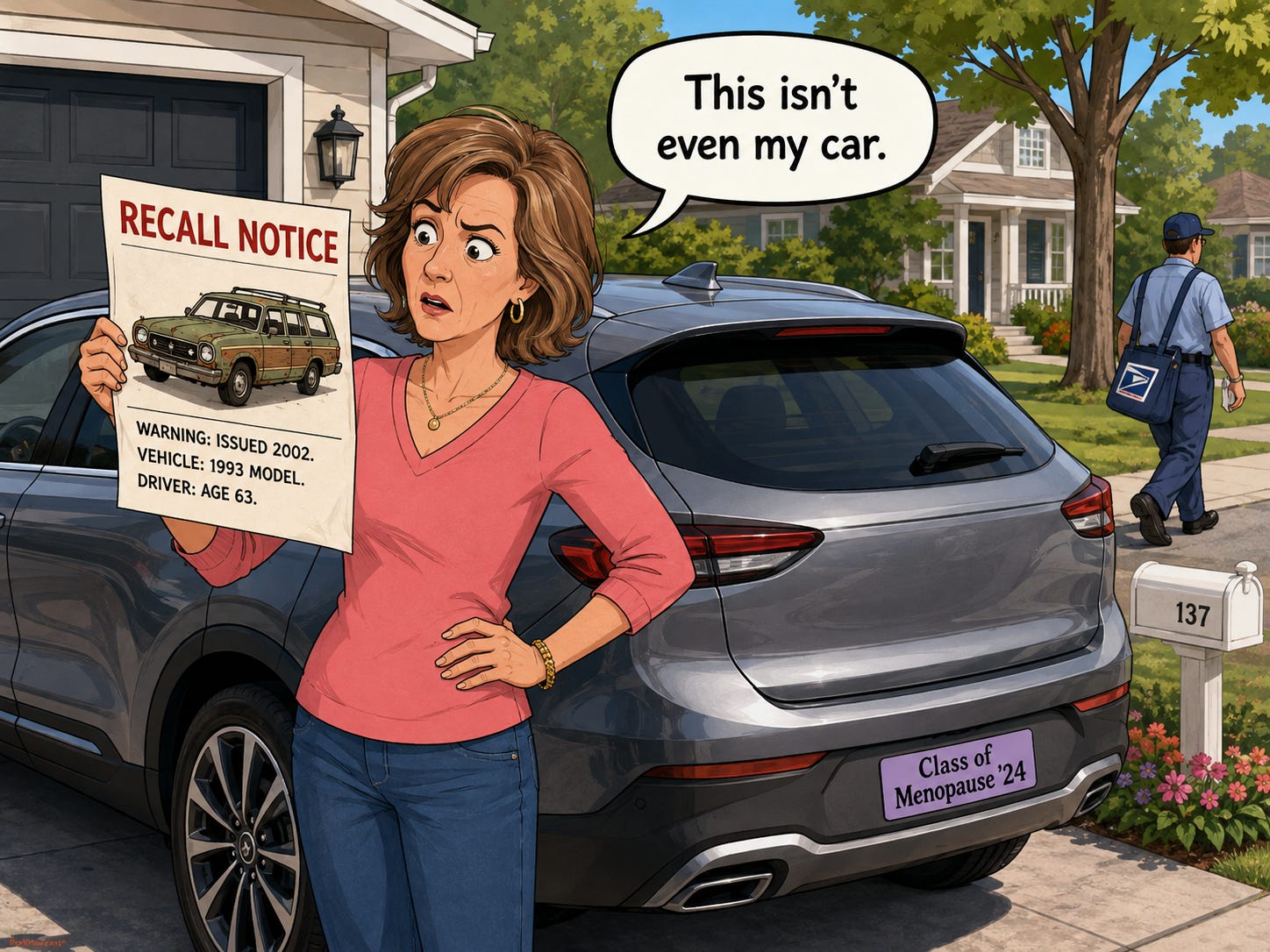
Two weeks. That is all it took.
One minute, I was running the Boston Half Marathon and crushing a personal record. Strong, vibrant, pacing out something close to joy.
Two weeks later, I could not stand up without wincing.
My joints felt like rusty hinges, my brain went foggy, my sleep vanished, and my mood became a problem I did not have a name for. My LDL cholesterol, which I had kept below 100 my entire adult life, sailed past it for the first time.
I was eating clean, lifting weights. I was a physician, for heaven’s sake. And still, my body had been hijacked by something deeply hormonal and deeply rude.
So I did what I always do when something does not add up. I went full nerd. I pulled every research paper and clinical guideline I could find.
What I discovered floored me. When estrogen drops, your body loses the hormone that was keeping your metabolism running. Your cells handle insulin differently, you start storing fat in new places, your cholesterol shifts, and inflammation climbs. Most doctors were still working from guidelines that treated menopause as a footnote.
Over the next year I studied and became a certified menopause practitioner. I built the course I wished had existed the moment I collapsed on the couch wondering whether I was dying or just perimenopausal. But here is the part I did not understand until later, and neither did most of my colleagues. The black-box warning that had kept an entire generation of physicians from offering hormone therapy was based on a study of women who looked nothing like me.
I had been reading a recall notice addressed to someone else’s vehicle.
The Recall
In 2002, the largest randomized trial of hormone therapy was stopped early. Beginning in 2003, the FDA added a black-box warning across the class of menopausal hormone therapy products sold in the United States. The warning named four dangers. Cardiovascular disease, breast cancer, stroke, and probable dementia. It went on every box and every pharmacy printout, regardless of formulation, dose, or patient.
That warning stood for more than twenty years. It shaped what doctors offered and what women accepted. In 2020, only about 41 million American women were between 45 and 64. That same year, about 2 million women aged 46 to 65 filled a prescription for systemic hormone therapy.
On November 10, 2025, the FDA requested that the warning be removed.
On February 12, 2026, the first six relabeled products were approved. The black-box language on cardiovascular disease, breast cancer, and probable dementia is gone. The “lowest effective dose for the shortest duration” language is gone from the boxed warning. In its place, new guidance. The revised systemic labels now read, “Consider initiating in women under 60 years old or less than 10 years since menopause onset.”
One warning stayed. If you have a uterus and take estrogen without a progestogen, the endometrial cancer black box remains, and it remains for good reason.
So what changed between 2002 and 2025? The FDA looked at who was actually in the trial.
The Wrong Model Year
The trial that generated the warning enrolled postmenopausal women between the ages of 50 and 79 at 40 centers across the United States. The average age was 63. One-third were between 50 and 59. Just over 45% were between 60 and 69. The remaining 21% were 70 or older. Two-thirds of the women in the combined-therapy arm were over 60.
The formulation was a specific oral estrogen derived from horse urine (conjugated equine estrogen, 0.625 mg per day) combined with a synthetic progestogen (medroxyprogesterone acetate, 2.5 mg per day). That combination is rarely prescribed today.
The trial was designed to test whether this particular regimen could prevent chronic disease in older postmenopausal women. The main thing they were measuring was heart disease prevention. It was not designed to test whether hormone therapy is safe for a 52-year-old with drenching night sweats.
The arm of the trial that tested estrogen plus a progestogen together was stopped at 5.2 years because the data showed that risks exceeded benefits in this population. To put the numbers in perspective, imagine 10,000 women taking this specific combination for one year. Compared to 10,000 women taking a placebo, the hormone group would see 8 more breast cancer diagnoses, 7 more heart disease events, 8 more strokes, and 8 more blood clots in the lungs. On the other side of the ledger, they would see 6 fewer colorectal cancers and 5 fewer hip fractures. Total mortality did not change.
When I was sitting on my couch two weeks after that half marathon, joints screaming, brain foggy, and my doctor pointed to the black box on the label, neither of us understood that the recall notice had been written for a different woman, a decade older, on a different drug, enrolled for a different purpose.
In 2025, the FDA finally looked at who the recall was addressed to.
The Hormone Therapy Conversation Guide.
Below you will find:
What the trials showed when the data was broken out by age.
Whether you can start hormone therapy after 60 or more than ten years past menopause.
What to ask your doctor, and how to spot a telehealth prescriber who is skipping steps.
Why the compounded “bioidentical” hormones you see advertised are not what they claim to be.
A printable two-page worksheet you can bring to your next appointment.
And free access to my Master Menopause and Feel Fabulous course.
Upgrade now to access.
