


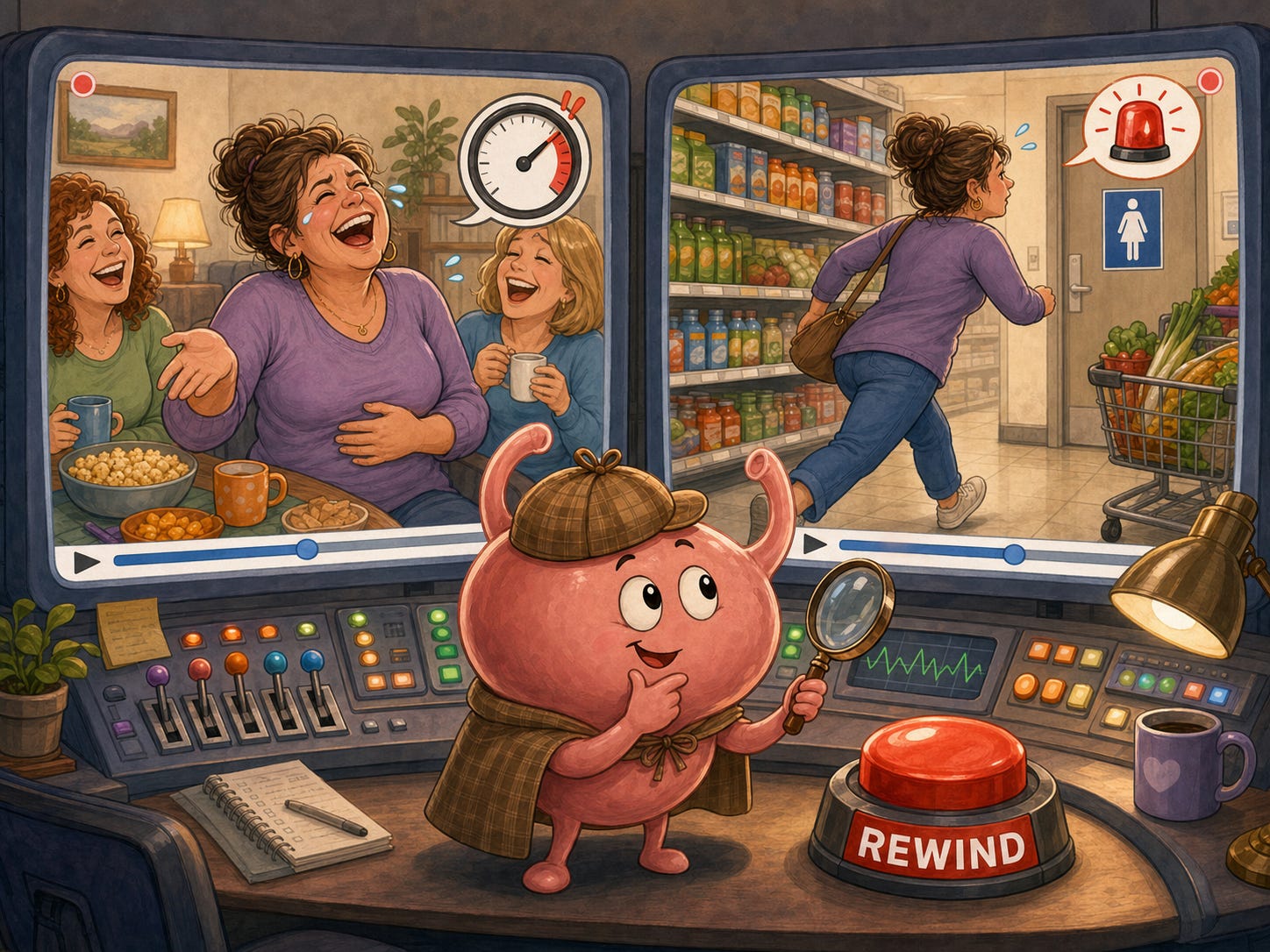
You’re laughing so hard your eyes are watering when you feel it. You didn’t need the bathroom. Your bladder wasn’t even on your mind. You laughed, your stomach tightened, and a little urine escaped.
Another day, you’re walking through the grocery store when you notice you need to go. At first it feels manageable. Somewhere between the cereal aisle and the restroom door, that feeling turns into I need to go now, and you don’t quite make it.
Both moments end with the same frustrating sentence. “My bladder leaked.” That sentence is true, but it leaves out the most useful part of the story. The two leaks did not begin in the same place.
After a collision, the most useful witness may be a device most drivers never think about. An event data recorder preserves a narrow window around an impact, including the car’s speed, whether the driver braked, and how far the accelerator was pressed. The crumpled fender shows what happened at the end. But those recorded seconds around the actual event as it was happening, help investigators reconstruct what led to the impact in the first place.
A bladder leak also gives you an ending without the lead-in. The missing clue is what your bladder was coordinating in the seconds before it happened.
Your bladder has two jobs, and it has to keep them separate. Most of the day, it stretches and relaxes as it fills. At the same time, the urethra, the tube that carries urine out of your body, stays closed. A ring of muscle called the sphincter helps keep it closed, while the pelvic floor and nearby tissues support everything from below. When everything is working as it should, you can finish a conversation, unload the groceries, or drive home without thinking about any of it. Then when you decide to urinate, the pattern reverses. Nerve signals coordinate the switch. The bladder squeezes and the outlet opens at the right time.
Now go back to your own last leak. What happened in the few seconds before it? The answer will not diagnose the cause, but it can keep two different problems from ending up with the same generic advice.
Next, we’ll rewind the two leak patterns, see what changes when they overlap, and turn the clue into a tool you can bring to your doctor.
Upgrade now to access.
