


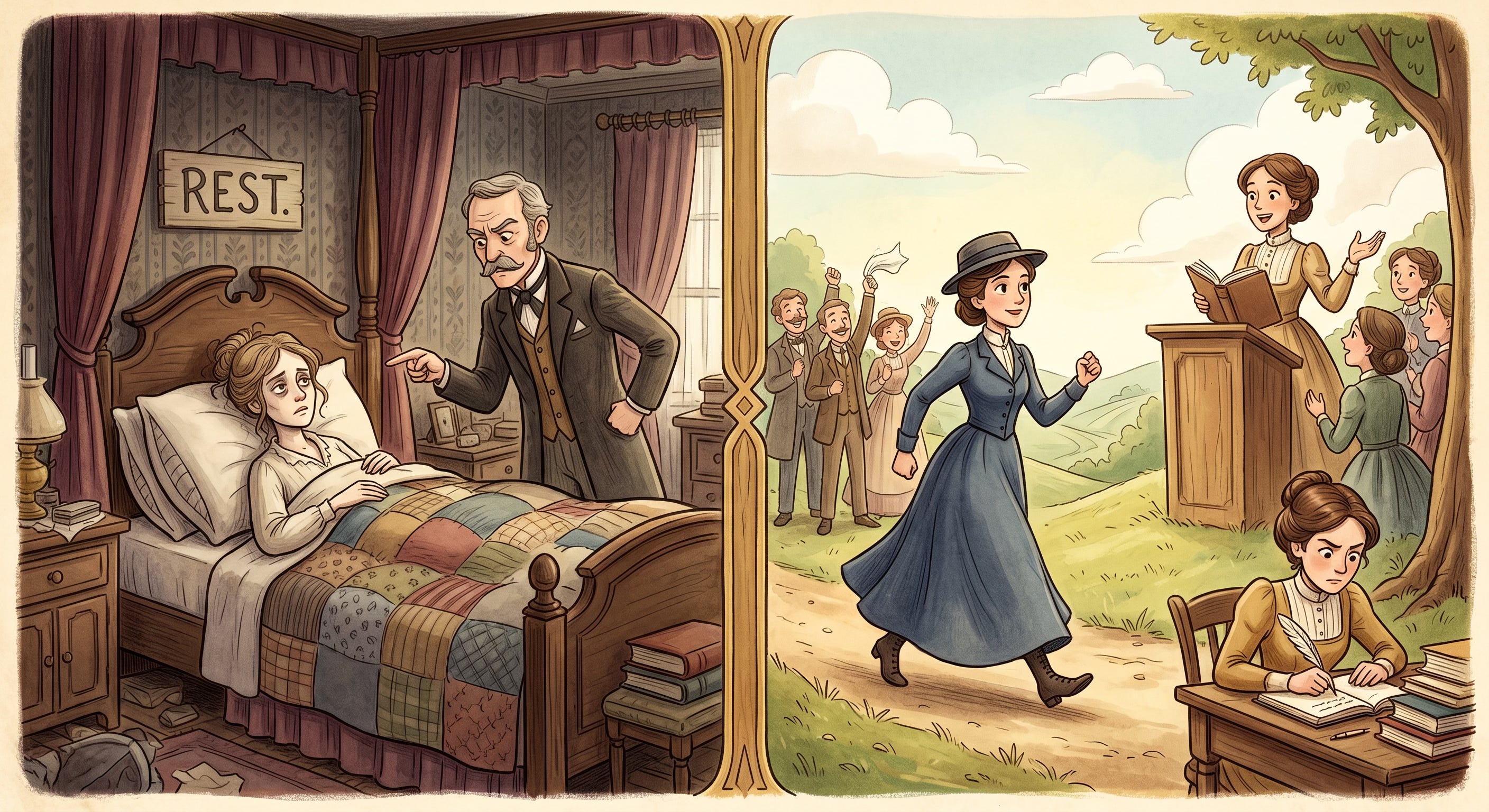
In 1887, a young woman sat in a Philadelphia clinic. She had been suffering from what she described as a severe and continuous nervous breakdown tending to melancholia. The most famous nerve specialist in the country examined her, put her to bed, and sent her home with three instructions. Live as domestic a life as possible. Limit yourself to two hours of intellectual activity per day. And never pick up a pen, brush, or pencil again as long as you live.
That same decade, men diagnosed with the exact same condition were getting the opposite prescription.
The prevailing treatment for nervous men was something called the West Cure. Anxious, depleted men were sent to the frontier for prolonged stretches of cattle roping, hunting, and roughriding. The painter Thomas Eakins, depressed after losing his teaching position, spent a summer at a ranch in the Dakota Badlands. He herded cattle, slept on the ground, and came back looking, according to one friend, “built up miraculously.” The poet Walt Whitman traveled West and wrote about the experience. A young Theodore Roosevelt, asthmatic and anxious, visited the Dakotas to rough-ride his way toward health and returned with a new body and a new political persona.
The diagnosis was the same. The prescriptions were opposite, split entirely along the line of gender.
The Rest Cure
The condition was called neurasthenia, and it was everywhere in late-nineteenth-century America. First described by a neurologist in 1869, its symptoms included depression, insomnia, anxiety, and migraines, and the condition was thought to be a byproduct of modern life overtaxing the nervous system. A different neurologist developed the treatment that became standard for women.
His solution was total immobility. Weeks or even months of strict bed rest, during which patients were forbidden from walking, reading, or engaging in intellectual activity of any kind. They were fed and given massage, and the explicit goal was weight gain and passivity. The medical establishment celebrated this approach. One contemporary review called it “the greatest advance of which practical medicine can boast in the last quarter of the century.”
The doctors who prescribed it had no way to measure what it was doing to the body. But controlled research has since made the picture very clear. In one of the most famous studies in exercise science, healthy young men who spent three weeks in complete bed rest lost more cardiovascular capacity than they would lose over the next three decades of normal aging. Bed rest at twenty was as damaging as aging to sixty. Even a week or two of immobility worsens insulin resistance and accelerates muscle loss, and the symptoms it produces, fatigue, weakness, poor sleep, look remarkably like the symptoms the rest cure was supposed to be treating. A peer-reviewed medical editorial would eventually sum it up in a single sentence. Rest has no place in treating chronic fatigue.
The Women Who Said No
While the most prominent doctor in the country was confining women to their beds, three separate movements of women were proving him wrong.
The first was the young woman from Philadelphia.
Her name was Charlotte Perkins Gilman, and she obeyed the prescription for three months. She came so near the borderline of what she called “utter mental ruin” that she could see over it. Then she threw out the specialist’s instructions and went back to work. She picked up the pen she had been told never to touch again and began writing, ultimately recovering, in her own words, some measure of power.
She eventually published a short story, The Yellow Wallpaper, about a woman driven to madness by the rest cure, and it became one of the most widely read works of American feminist literature. Years later, she learned that the specialist himself had admitted to friends that he had changed his treatment of nervous illness after reading it.
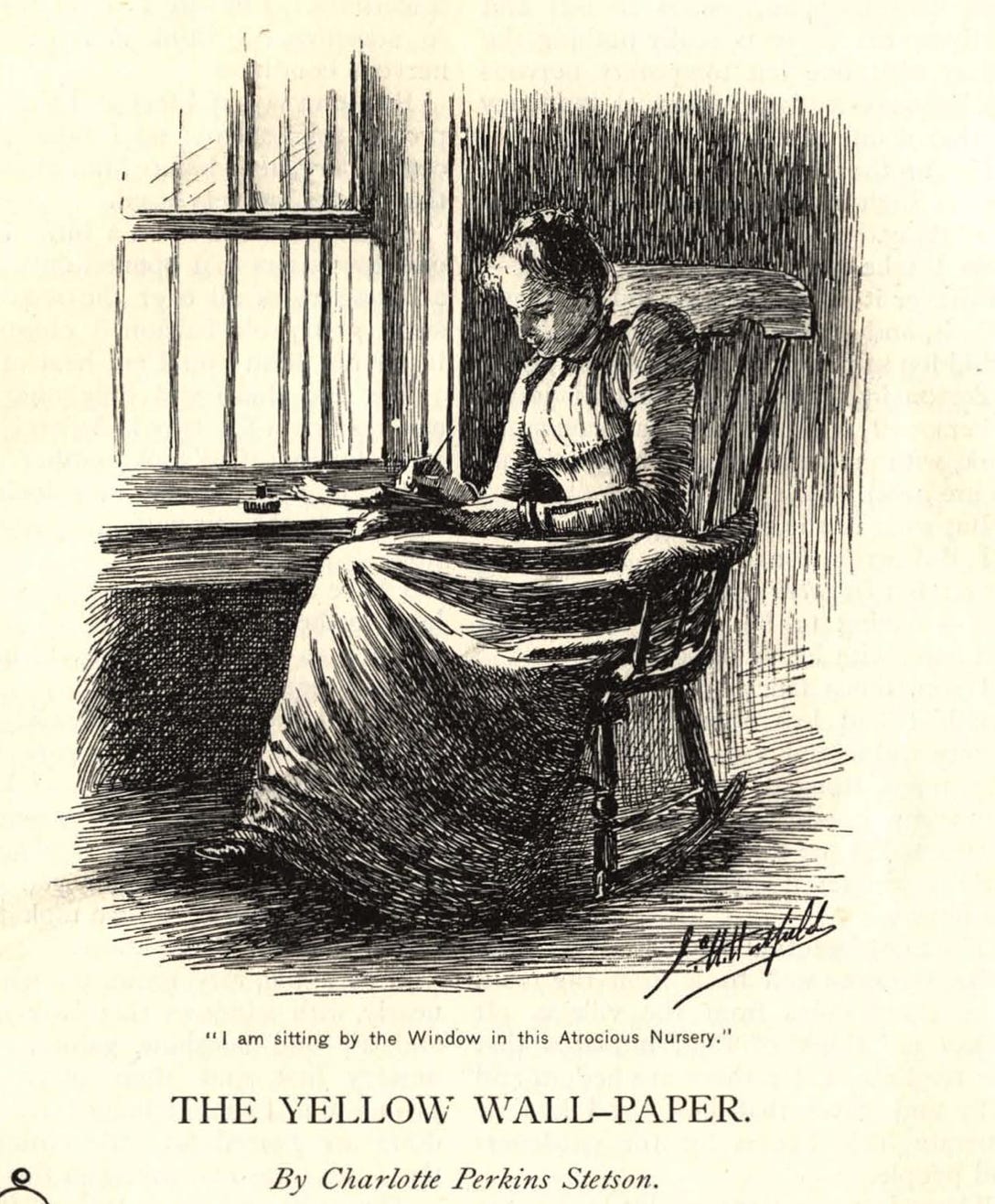
It would take more than a century for the research to catch up with Gilman’s instinct. A major analysis of exercise and depression, published in 2024 and covering more than 14,000 participants across 218 studies, found that physical activity, walking among them, was one of the most effective approaches for reducing depressive symptoms, with effects comparable to established first-line treatments. Gilman defied rest, got better, and the research eventually explained why.
The second movement started decades before the rest cure even existed.
In the 1850s, a woman named Catharine Beecher published a manual called Physiology and Calisthenics for Schools and Families. She was Harriet Beecher Stowe’s older sister, and she had a theory. She believed that ignorance of how the body works and the cultural habit of keeping women sedentary were making them sick. So she wrote an exercise manual. Specifically, a system of calisthenics that could be practiced “without apparatus, and without a room set apart for the purpose.” She designed it for schoolgirls, for seamstresses in their shops, for invalids in their bedrooms, for anyone who could open a window and move.
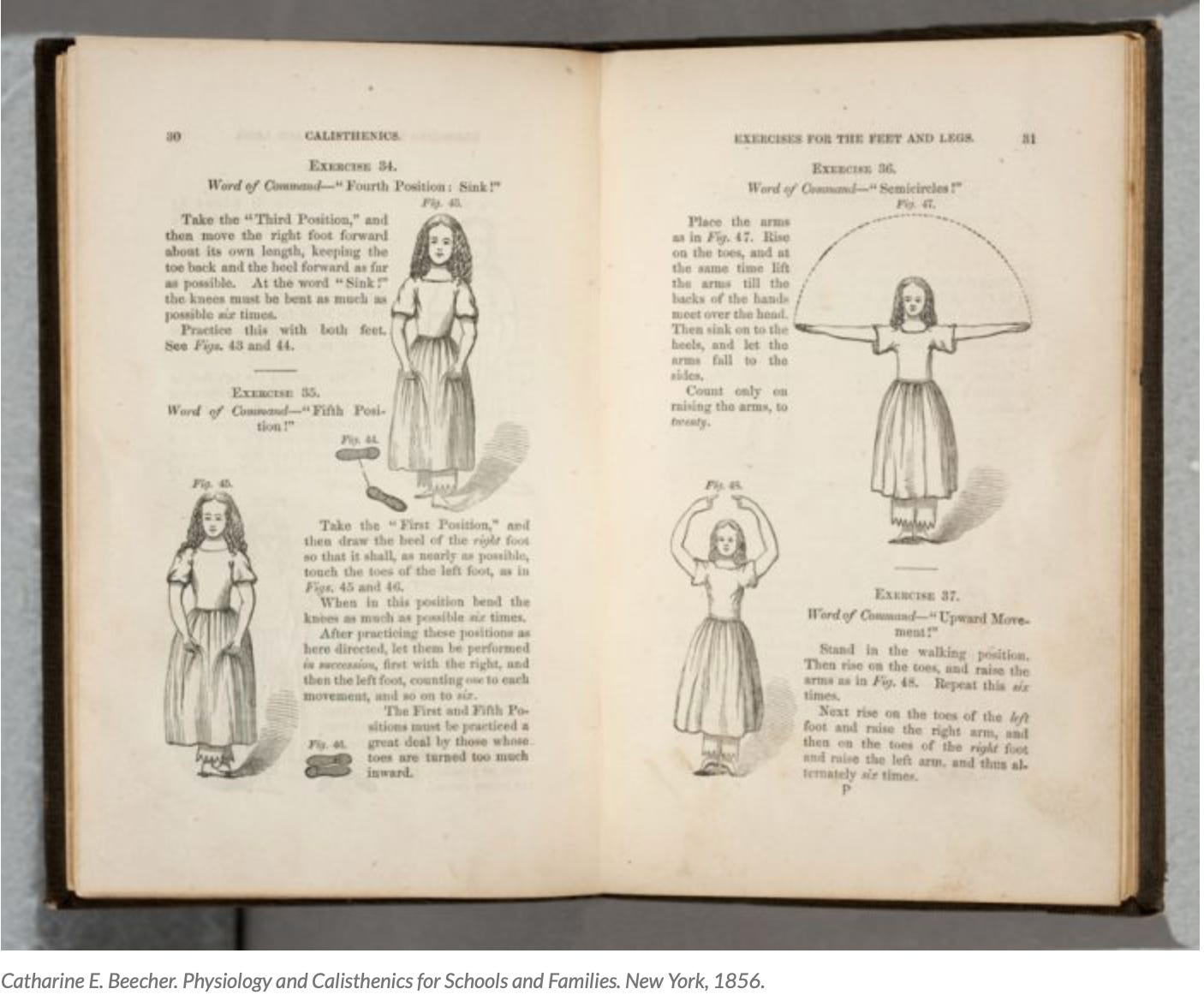
Beecher was writing the first exercise prescription for women before the field of exercise science had a name. Her manual drew on the methods of Ling, a Swedish professor whose movement system was gaining traction in European schools and universities. Beecher made it accessible and domestic. And while she acknowledged that some exercises suited to men might not fit women, she never wavered on the prescription itself. Women needed movement, not more rest, and the prevailing habit of keeping them sedentary was itself a cause of illness.
The third movement was the strangest and most spectacular of all.
In the 1870s and 1880s, working-class women began entering the world of competitive endurance walking. They were called pedestriennes, and they drew crowds in the thousands. One British woman, a former actress, circus clown, and singer who went by “Madame Anderson,” walked a quarter-mile every fifteen minutes, around the clock, for twenty-eight consecutive days at an arena in Brooklyn. Newspapers reported daily on her condition, her lap times, what she ate and drank, and what songs she sang for spectators. She barely slept, and she kept going.
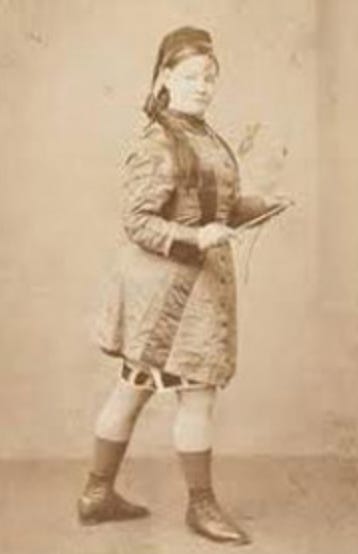
These women were performing feats of endurance that would be remarkable by any modern standard. Suffragists pointed to them as living proof that women were not frail, while doctors were split and religious leaders wanted the events shut down. Crowds paid anywhere from twenty-five cents to a dollar apiece to watch.
One newspaper editorial, written after a women’s walking contest drew massive crowds, noted that women had recently been denied the right to practice law before the Supreme Court but were now succeeding spectacularly on the walking track. The editor predicted that the walking match was just the beginning, and that the right to practice law and eventually the right to vote would follow.
The Science Catches Up
The rest cure fell out of fashion after World War I, replaced by newer therapies. But “go home and rest” persisted as medical advice for fatigue well into the twentieth century, and it took space-program research, decades later, to close the case against prolonged inactivity for good.
When researchers eventually turned their attention to walking itself, they found something more specific. Walking helped, but when you walked mattered enormously.
In a controlled trial of older adults at risk for glucose intolerance, researchers compared three exercise protocols of equal total volume. One group walked for forty-five minutes in the morning, another for forty-five minutes in the afternoon, and a third broke the same total time into three fifteen-minute bouts, one after each meal. Both morning walking and post-meal walking improved overall blood sugar control, but the post-meal walks were significantly more effective at lowering blood sugar in the three hours after dinner.
A separate trial of adults with type 2 diabetes found the same thing. Walking for ten minutes after each meal lowered post-meal blood sugar more than a single thirty-minute walk taken at any other time of day, and the effect was most pronounced after the evening meal, when carbohydrate intake tended to be highest and sedentary behavior was at its peak.
The difference in both trials was timing. Walking after a meal, when glucose is actively entering the bloodstream, puts working muscles in a position to pull sugar directly from the blood. It requires no special equipment and no particular intensity, just a walk at the right moment.
Do This On Monday
This week, after your largest meal, go for a fifteen-minute walk.
Just walk, at whatever pace feels comfortable. If dinner is your biggest meal, walk after dinner. If lunch is larger, walk after lunch. Start within a few minutes of finishing.
The Victorian women who defied their doctors did not have glucose monitors or peer-reviewed evidence. Charlotte Perkins Gilman walked away from the rest cure and picked up a pen. Catharine Beecher opened a window and taught girls to move. Ada Anderson walked a quarter-mile every fifteen minutes for four straight weeks in front of paying crowds in Brooklyn.
You are being asked for fifteen minutes.
The data caught up with them, and it will catch up with you, too.
If you want to talk about what you noticed this week, or ask questions about building a walking habit that sticks, join us inside The Habit Healers community on Skool where I go live weekly with you. This is where we go deeper, together.
References:
Reynolds AN, Mann JI, Williams S, Venn BJ. Advice to walk after meals is more effective for lowering postprandial glycaemia in type 2 diabetes mellitus than advice that does not specify timing: a randomised crossover study. Diabetologia. 2016;59(12):2572-2578. doi:10.1007/s00125-016-4085-2
DiPietro L, Gribok A, Stevens MS, Hamm LF, Rumpler W. Three 15-min bouts of moderate postmeal walking significantly improves 24-h glycemic control in older people at risk for impaired glucose tolerance. Diabetes Care. 2013;36(10):3262-3268. doi:10.2337/dc13-0084
Engeroff T, Groneberg DA, Wilke J. After Dinner Rest a While, After Supper Walk a Mile? A Systematic Review with Meta-analysis on the Acute Postprandial Glycemic Response to Exercise Before and After Meal Ingestion in Healthy Subjects and Patients with Impaired Glucose Tolerance. Sports Med. 2023;53(4):849-869. doi:10.1007/s40279-022-01808-7
Mitchell JH, Levine BD, McGuire DK. The Dallas Bed Rest and Training Study: Revisited After 50 Years. Circulation. 2019;140(16):1293-1295. doi:10.1161/CIRCULATIONAHA.119.041046
Di Girolamo FG, Fiotti N, Milanović Z, et al. The Aging Muscle in Experimental Bed Rest: A Systematic Review and Meta-Analysis. Front Nutr. 2021;8:633987. Published 2021 Aug 4. doi:10.3389/fnut.2021.633987
Coker RH, Hays NP, Williams RH, Xu L, Wolfe RR, Evans WJ. Bed rest worsens impairments in fat and glucose metabolism in older, overweight adults. J Gerontol A Biol Sci Med Sci. 2014;69(3):363-370. doi:10.1093/gerona/glt100
Noetel M, Sanders T, Gallardo-Gómez D, et al. Effect of exercise for depression: systematic review and network meta-analysis of randomised controlled trials. BMJ. 2024;384:e075847. Published 2024 Feb 14. doi:10.1136/bmj-2023-075847
Sharpe M, Wessely S. Putting the rest cure to rest--again. BMJ. 1998;316(7134):796. doi:10.1136/bmj.316.7134.796
Stiles A. Go rest, young man. Monitor on Psychology. 2012;43(1):32.
Gilman CP. Why I wrote The Yellow Wallpaper. The Forerunner. October 1913.
Shaulis D. Pedestriennes: newsworthy but controversial women in sporting entertainment. J Sport Hist. 1999;26(1):29-50.
Beecher CE. Physiology and Calisthenics for Schools and Families. New York: Harper & Brothers; 1856.
