

Are There Movements That Matter More Than Your Workout?

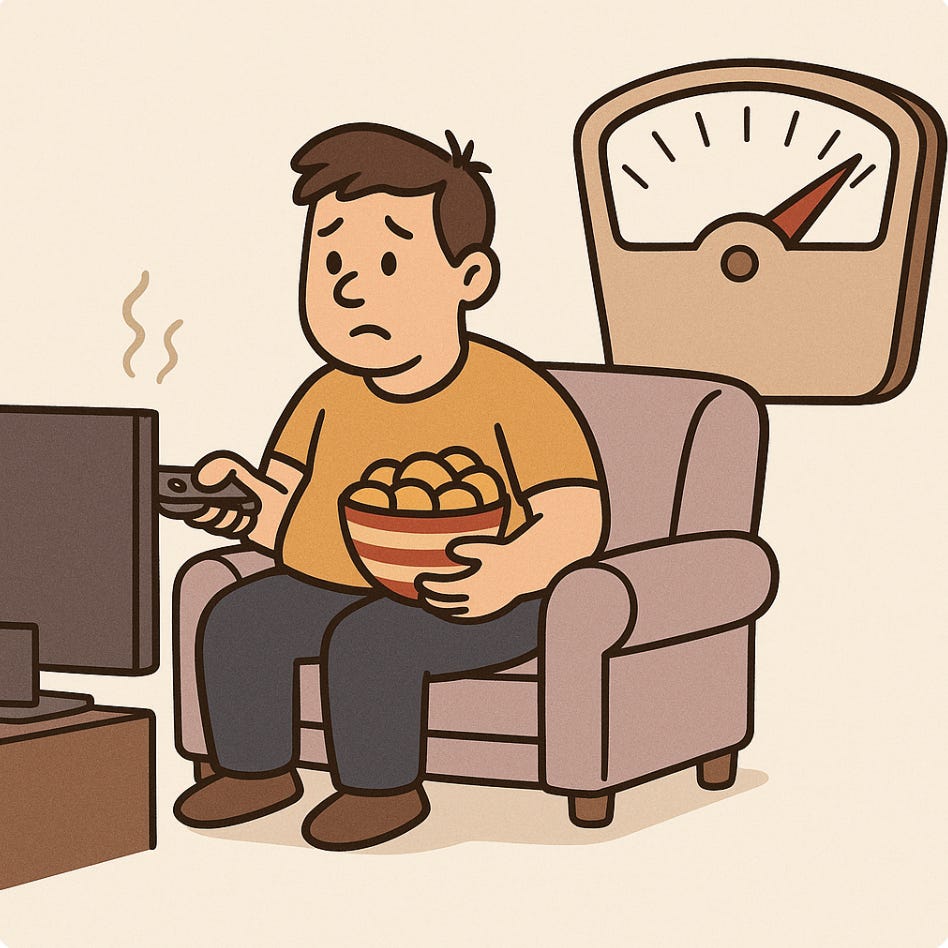
There is a strange pattern that shows up again and again in metabolic research, and once you see it, you cannot unsee it.
The biggest differences in metabolic health between people often have nothing to do with their workouts.
Some people exercise daily and still struggle with blood sugar, blood pressure, energy, or weight. Others exercise very little yet seem metabolically steady. When researchers dig into why, the explanation is not a mystery at all. It is something simple and almost boring:
How often you move in the other twenty three hours of the day.
Scientists call it NEAT, which stands for Non Exercise Activity Thermogenesis. The name does not matter. What matters is that NEAT is all the movement you do that is not considered exercise.
And the science is clear: NEAT changes the body in ways most people have never been told.
What Happens Inside the Body When You Sit Too Long
One of the cleanest findings in research is what happens in the leg muscles after long sitting. These large muscles essentially “power down.” When they do, they stop pulling sugar out of the bloodstream. Blood sugar climbs higher after meals. Insulin rises to try to compensate. Blood flow in the legs slows. The inner lining of blood vessels begins to respond as if the environment is hostile, not healthy.
If sitting continues, these small changes compound.
Blood pressure starts drifting up.
Inflammation increases.
The brain gets less oxygen-rich blood.
You feel mentally duller.
In lab studies, it takes only three hours of uninterrupted sitting to measurably impair endothelial function, which is a marker of early vascular trouble. Healthy young adults show this effect too. It is not a problem of age. It is a problem of stillness.
Why Even Tiny Movements Undo So Much of the Damage
The body is responsive in both directions. When you stand up, even briefly, circulation improves. When you walk for a couple of minutes, your muscles begin pulling glucose back into cells. When you move from sitting to standing several times an hour, blood pressure gradually shifts in a healthier direction.
Researchers see this clearly when they test different “movement break” patterns. Breaking up sitting every 30 minutes consistently leads to better blood sugar control than waiting an hour. Even a two or three minute walk each half hour lowers the height of post-meal spikes and brings insulin levels down. The overall metabolic response becomes smoother.
There is also a timing effect around meals that is easy to miss. In studies where people walked either for 10 minutes right after a glucose load or for 30 minutes later on, both walks lowered total blood sugar about the same amount. The difference was in the spike. The early 10-minute walk blunted the peak more, showing that a small amount of movement at the right moment can change the shape of the curve.
This is why NEAT works so well. The benefits come from repetition and timing, not intensity.
The 800-Calorie Finding That Changed How We See Weight Gain
One of the most famous overfeeding studies gives a great example of how variable NEAT can be. Participants were overfed by 1,000 calories a day for eight weeks. Everyone ate the same extra calories. They all lived in the same controlled setting.
But their weight gain was wildly different.
Some people increased their NEAT by up to 692 calories a day without realizing it. They paced more, shifted more, moved more. Others decreased their NEAT by nearly 100 calories a day. The total difference between people was close to 800 calories per day, which is enough to completely change whether someone gains or maintains weight.
Same food.
Same environment.
Different everyday movement pattern.
That is how much the “in-between movement” matters.
How Blood Pressure Reacts to Movement Patterns
There is another striking finding. In one randomized trial with postmenopausal women, the group that improved their blood pressure was not the one who reduced total sitting the most. It was the group that increased the number of sit-to-stand transitions per day. Their systolic pressure dropped by about three points and diastolic by about two.
Standing more mattered.
But standing up more often mattered even more.
This tells us something essential: it is the pattern of movement, not the total minutes, that drives many of these changes.
Why NEAT Affects Longevity
Large studies using accelerometers show a clear curve:
People who get around three to six hours of light movement per day tend to have significantly lower risk of early death, heart disease, and diabetes. These hours are not spent exercising. They are spent doing daily life activities while not being still.
This includes:
Light walking
Household movement
Standing
Occupational movement
All the background activity that fills a day
Once light movement surpasses about three hours a day, risk begins to drop. Around six hours, benefits level off a bit. The point is not to chase a number. The point is to understand that the body is built for light movement spread across the day, not long blocks of stillness.
The Brain Responds to NEAT Too
Light movement affects blood flow to the brain. In studies measuring executive function, things like planning, switching tasks, staying focused, people who accumulate more light daily movement tend to perform better, even compared to people who perform moderate exercise but sit long hours.
The reason is straightforward. The brain receives more steady oxygen and nutrient flow with frequent movement. The nervous system does better when the body is not held in long fixed positions. People often describe clearer thinking, better focus, and fewer “energy crashes” when they interrupt sitting more often. This is exactly what the research shows.
What All of This Means for Real Life
Most people assume the only way to improve their health is to add more exercise. But when you see how sensitive the body is to movement — even extremely light movement — the opportunity becomes much larger.
If you are someone who sits for long periods, even small changes help:
Standing up more often
Moving for a couple of minutes every half hour
Walking after meals
Adding short breaks between tasks
Building small movements into chores or routines
These are not exercise habits. They are human habits. And your physiology responds to them immediately and repeatedly.
People often notice changes in a few days: less stiffness, more energy, fewer blood sugar swings, better focus. Not because they got fitter. Because they stopped giving their body hours of stillness to adapt to.
What Comes Next
Below this article you will find a simple NEAT Daily Movement worksheet you can use right away. It will help you:
See where your long sitting stretches actually happen
Notice where your natural NEAT already shows up
Spot the easiest opportunities to add movement
Choose one or two NEAT habits that fit your real life
Track how your energy, focus, or blood sugar patterns shift over the next week
Upgrade now to access the worksheet.
PS. If you want support building even smaller daily habits, the kind that take one or two minutes and are easy to repeat, you can join me on One Tiny Healing Habit Substack. That space is designed for exactly this kind of gentle, sustainable change.
You are truly one tiny healing habit away from better metabolic health.